
Polymer Bitumen Waterproofing Membranes
High-performance roll-applied waterproofing membranes developed to protect roofs, foundations and civil structures against water penetration, moisture damage and demanding weather conditions.
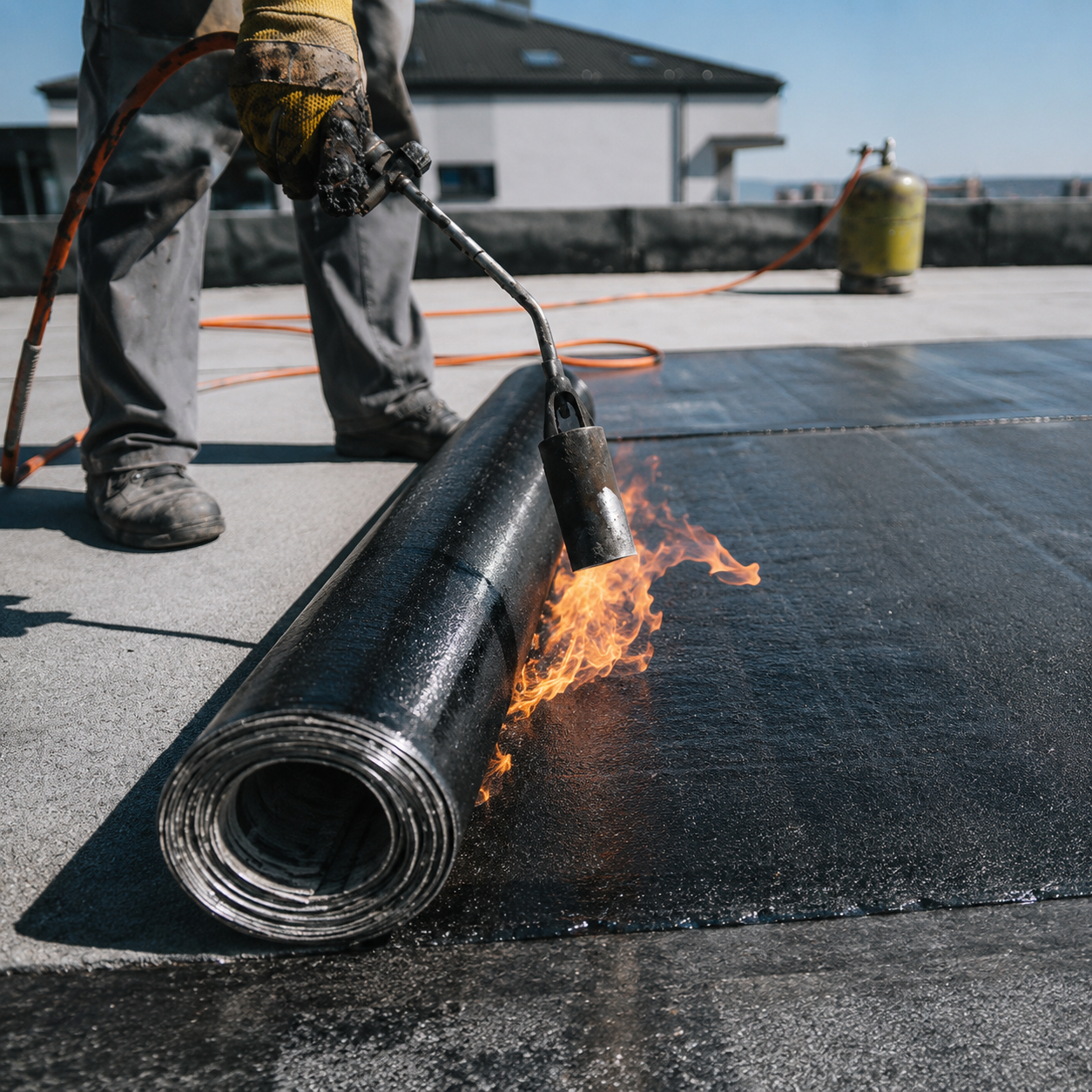
Engineered Waterproofing for Demanding Surfaces
Polymer Bitumen Membranes are factory-manufactured waterproofing sheets produced by combining selected bitumen with high-performance polymer modifiers and a reinforced carrier.
The resulting membrane offers dependable resistance against water, surface movement, temperature variations and prolonged outdoor exposure. Different upper and lower surface finishes allow the material to be used in exposed, protected and layered systems.
These membranes can be selected for torch-applied, self-adhesive or mechanically fixed installation depending on the substrate, structure and project safety requirements.
Types of Polymer Bitumen Membranes
Select an application system according to the substrate, installation method and required level of protection.
Regular Torch-Applied Membranes
Traditional waterproofing membranes applied by controlled torch heating to create a secure bond with the prepared base. They can be used as base layers, intermediate layers or exposed finishing membranes.
- Strong substrate adhesion
- Suitable for large roof areas
- Available with mineral finish
- For single or multi-layer systems
Self-Adhesive Membranes
Cold-applied membranes designed with a pressure-sensitive adhesive layer. They simplify installation where open-flame application is restricted or where faster and cleaner waterproofing work is preferred.
- No torch heating required
- Quick and convenient application
- Suitable for sensitive substrates
- Controlled adhesive bonding
Special-Purpose Membranes
Modified membrane systems developed for demanding project requirements such as bridge decks, heavy-duty foundations, sound-control floors, exposed roofs and areas requiring additional chemical or environmental resistance.
- Enhanced mechanical performance
- Specialized surface protection
- Suitable for infrastructure work
- Project-specific membrane selection
Mechanically Fixed Roof Underlays
Reinforced underlay membranes used below roofing shingles, tiles and other pitched roof coverings. They support secondary waterproofing and help seal around mechanical fasteners.
- Suitable below pitched roof coverings
- Supports nail and fastener sealing
- Provides secondary water protection
- Improves overall roof-system durability
Typical Product Configuration
Final membrane construction and dimensions should be selected according to the approved product grade and project specification.
| Product Detail | Typical Option |
|---|---|
| Product Type | Roll-applied polymer-modified bitumen membrane |
| Bitumen Modification | APP-modified or SBS-modified formulation |
| Reinforcement Carrier | Polyester, fibreglass or composite reinforcement |
| Upper Surface | Polyethylene film, mineral granules, sand or foil finish |
| Lower Surface | Thermofusible film or self-adhesive protective liner |
| Installation Method | Torch applied, self-adhesive or mechanically fixed |
| Layer Configuration | Single-layer or multi-layer waterproofing system |
| Available Dimensions | According to selected membrane grade and project need |
| Surface Preparation | Clean, dry, stable and properly primed substrate |
| Installation Area | Roofing, foundations, floors and civil structures |
Membrane Selection Guide
Selection should consider roof slope, substrate condition, expected structural movement, temperature exposure, installation restrictions and whether the membrane will remain exposed.
Benefits of Polymer Bitumen Membranes
A properly designed membrane system helps protect the structure, internal environment and long-term value of the property.
Waterproof Protection
Creates a continuous barrier that restricts water penetration through roofs, foundations and structural surfaces.
Long Service Life
Factory-controlled construction supports consistent thickness, strength and dependable long-term performance.
Movement Resistance
Polymer modification improves flexibility and helps the membrane accommodate minor structural movement.
Reduced Maintenance
Effective waterproofing helps reduce recurring repair work caused by moisture, leakage and surface deterioration.
Multiple Installation Methods
Torch-applied, self-adhesive and mechanically fixed options support different project and safety conditions.
Wide Application Range
Suitable for flat roofs, foundations, bridge decks, underlays, floors and engineering structures.
Where the Membranes Can Be Used
Designed for residential, commercial, industrial and infrastructure waterproofing requirements.
Flat Roofing
Waterproofing for exposed roofs, protected roofs and layered insulation systems.
Foundations
Moisture protection for foundation walls, retaining walls and below-ground structures.
Bridge Decks
Waterproofing below road surfacing and protective layers in civil infrastructure projects.
Pitched Roofs
Underlay protection below roof tiles, shingles and mechanically fixed coverings.
Basements
Protection against ground moisture and water ingress in underground occupied areas.
Terraces
Suitable for accessible terraces, service terraces and concrete roof slabs.
Industrial Structures
Waterproofing for factories, warehouses and heavy-duty commercial construction.
Vapour Control
Selected membrane grades can be used as vapour-control layers within roofing assemblies.
Four Essential Application Stages
Professional installation and correct substrate preparation are important for dependable waterproofing performance.
Surface Preparation
Remove dust, loose particles, moisture and irregularities from the installation surface.
Primer Application
Apply a compatible bitumen primer where required and allow it to dry properly.
Membrane Installation
Position, align and bond the membrane according to the selected application method.
Joint Inspection
Check overlaps, corners, terminations and penetrations before final protection work.
Need a Waterproofing Membrane Solution?
Choose the correct membrane type, reinforcement, surface finish and installation method according to your roofing or construction project requirements.